On this page
Count how many times your garage door moves in a week — for most Perth families it beats every other mechanical thing they own except the car. Yet the car gets serviced on schedule and the door usually gets remembered only when it stops. Flipping that habit is worth real money: a maintained door rarely produces emergencies, and emergencies are where garage doors get expensive.
Why regular servicing matters
Everything about a garage door concentrates load into a handful of parts: springs wound to high tension, cables carrying the full weight, rollers and tracks steering it, and an opener working against whatever friction the rest allows. None of these fail out of nowhere — they telegraph trouble through small changes a technician is trained to spot. Skip the check-ups and those small changes compound in silence until the morning the door won't move.
- Spring and cable fatigue gets caught before the bang
- Auto-reverse and photo-eye safety systems stay proven, not assumed
- The opener lasts longer because it's never fighting a stiff door
- Ten-dollar wear items get replaced before they cause hundred-dollar damage
- The door keeps running smoothly and quietly instead of announcing itself
How often you actually need it
The right interval depends on how hard the door works and where it lives. Use these brackets as your guide:
Recommended servicing frequency
- Typical home, door used 1–4 times a day: yearly
- Busy households clocking 5+ cycles a day: every 6–9 months
- Commercial and strata doors: six-monthly, or as the manufacturer specifies
- Salt-air suburbs along the Perth coast: every 6–9 months — corrosion doesn't wait
- Doors past 10 years old: every 6–12 months, watching springs and cables closely
Why coastal suburbs need more frequent servicing
Within a few kilometres of the ocean — think Scarborough, Fremantle, Rockingham — airborne salt pits springs, tracks and fixings well ahead of their inland lifespan. A shorter interval means the corrosion gets found while it's still surface-deep.
What a service includes
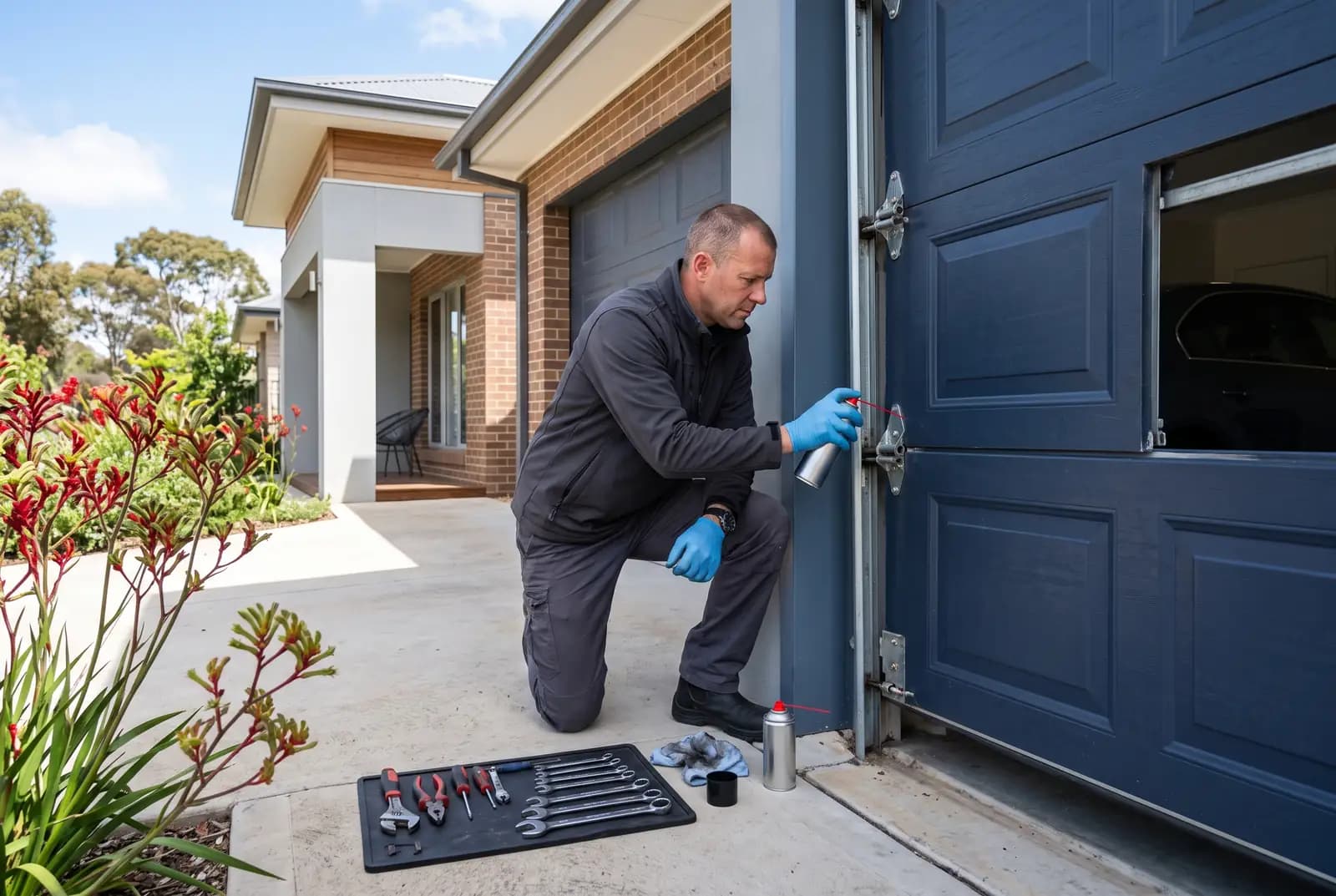
A real service works on the door, not just around it. When an Elite Garage Doors technician books your door in, the visit runs through:
- The whole door inspected — panels, tracks, and frame fixings
- Rollers, hinges and tracks checked for wear and lubricated properly
- Spring tension measured and corrected
- Cables and pulleys examined for rust and broken strands
- Opener, drive, remotes and wall controls all function-tested
- The auto-reverse and photo-eye safety systems proven against a real obstruction
- Every bracket, bolt and fixing re-torqued
- A balance test confirming the springs, not the motor, are carrying the door
DIY checks vs. professional servicing
Between visits, a homeowner can safely do three things: listen for sounds the door didn't used to make, keep the tracks clear and wiped down, and test that the door still reverses off an obstruction. All three cost nothing and catch a surprising amount early.
Simple checks you can do yourself
Monthly: lay a length of timber flat where the door closes and run the door down onto it. The door should touch and immediately lift away. If it presses on instead, stop using the auto-close and book a technician — that reversal is the feature protecting kids and pets.
Never attempt this yourself
The line you don't cross: anything under tension. Springs, cables, drums and their fittings store enough energy to cause serious injury, and adjusting them safely requires proper winding tools and training. That work belongs to a technician, every time.
What the professional visit adds is everything a walk-around can't see: actual spring tension against the door's weight, wear inside the opener, and the condition of the hardware doing the structural work. That hidden layer is where nearly all preventable failures start.
Warning signs you shouldn't ignore
A service schedule isn't a reason to ignore the door between visits. Any of these means bring the booking forward rather than waiting:
- Sounds that are new — grinding, popping, scraping
- One side lifting ahead of the other, or a visibly crooked door
- Rust blooms, frayed cable strands, or a stretched-looking spring
- An opener that labours, pauses, or has slowed down noticeably
- A door that fails the timber test and doesn't reverse